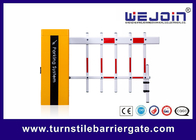
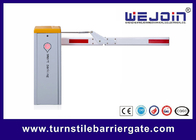
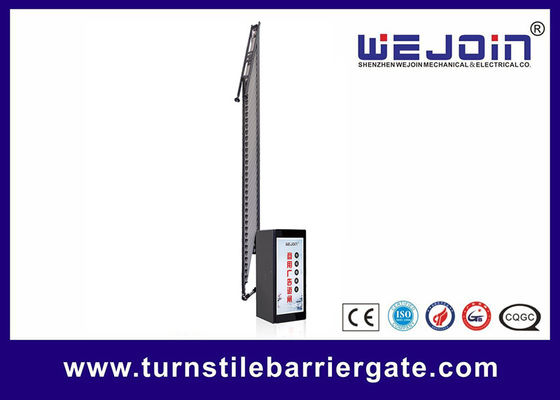
En la tecnología automática de puertas de barrera, la alta velocidad no es simplemente una cuestión de aumentar la velocidad del motor.
A medida que aumenta la velocidad de funcionamiento del boom, la estructura mecánica, el sistema de transmisión y la trayectoria de movimiento también deben diseñarse juntos.
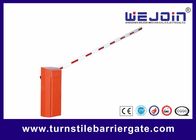
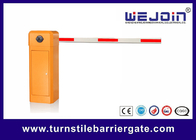
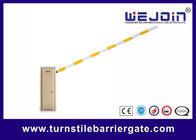
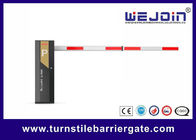
El WEJOIN G30 Super 3D Barrier utiliza fuerzas de accionamiento en direcciones verticales y horizontales para crear una trayectoria de movimiento curvado tridimensional,proporcionar un enfoque alternativo para el diseño de puertas de barrera de alta velocidad.
Las puertas de barrera convencionales utilizan principalmente un solo movimiento
Una puerta de barrera convencional generalmente sigue un principio de funcionamiento simple: el mecanismo de accionamiento gira el brazo hacia arriba y hacia abajo.
Este diseño puede satisfacer los requisitos de muchas aplicaciones básicas de control de acceso de vehículos.
Sin embargo, cuando un proyecto requiere velocidades de operación más altas, factores como la trayectoria del brazo, el movimiento inicial y la posición de parada se vuelven cada vez más importantes.
Por lo tanto, las puertas de barrera de alta velocidad requieren que se considere todo el sistema de movimiento.
G30 crea una trayectoria de movimiento 3D a través de dos direcciones de conducción
El G30 utiliza dos motores de propulsión.
Según la información oficial de WEJOIN, la transmisión vertical utiliza una transmisión planetaria de dos etapas, mientras que la transmisión horizontal utiliza una transmisión de dos etapas.Los dos movimientos se combinan para crear una trayectoria de movimiento curvado tridimensional.
Por lo tanto, el brazo no gira simplemente hacia arriba y hacia abajo, sino que sigue una trayectoria tridimensional diseñada durante la apertura y el cierre.
¿Por qué es relevante el movimiento 3D para la operación a alta velocidad?
Durante el funcionamiento de alta velocidad, la puerta de barrera debe gestionar diferentes etapas, incluido el inicio, la aceleración, el movimiento y la parada.
El G30 utiliza un mecanismo de movimiento 3D junto con un motor sincrónico de CC con imán permanente y un control de frecuencia variable.
Según las especificaciones oficiales del producto, el G30 tiene una velocidad de operación de 0,3 segundos.
Por lo tanto, al evaluar una barrera de alta velocidad,Es importante tener en cuenta no sólo la especificación de velocidad sino también el sistema de accionamiento y si la estructura mecánica ha sido diseñada para el funcionamiento a alta velocidad..
Las posiciones de frenado ajustables mejoran la flexibilidad de la instalación
Una característica estructural del G30 es su capacidad para establecer posiciones de parada en diferentes puntos dentro del espacio tridimensional.
Esto significa que el sistema no está limitado por completo por la altura fija del movimiento del brazo que se encuentra en las estructuras de barrera convencionales.
Para diferentes trazados de carril y condiciones de instalación, este enfoque de control de movimiento proporciona una flexibilidad de configuración adicional.
El doble accionamiento proporciona una capa de funcionamiento adicional
El G30 utiliza dos sistemas de accionamiento independientes.
Según la información del producto, si una unidad se encuentra con un fallo, la otra aún puede realizar movimientos en su dirección espacial correspondiente.
Esto no significa que la barrera mantenga toda su funcionalidad en todas las condiciones de fallo posibles.la estructura de doble accionamiento añade una capa adicional de redundancia al sistema de movimiento mecánico.
Para los proyectos B2B, esta característica estructural es más significativa que simplemente promover la alta velocidad.
De movimiento de un eje a movimiento 3D
El concepto técnico detrás del G30 puede resumirse como:
Transmisión bidireccional → trayectoria curva 3D → control de movimiento a alta velocidad.
Este enfoque combina la ingeniería mecánica con el control de movimiento para proporcionar otra solución de puerta de barrera para aplicaciones de acceso de vehículos de alta frecuencia.


 ¡Su mensaje debe tener entre 20 y 3.000 caracteres!